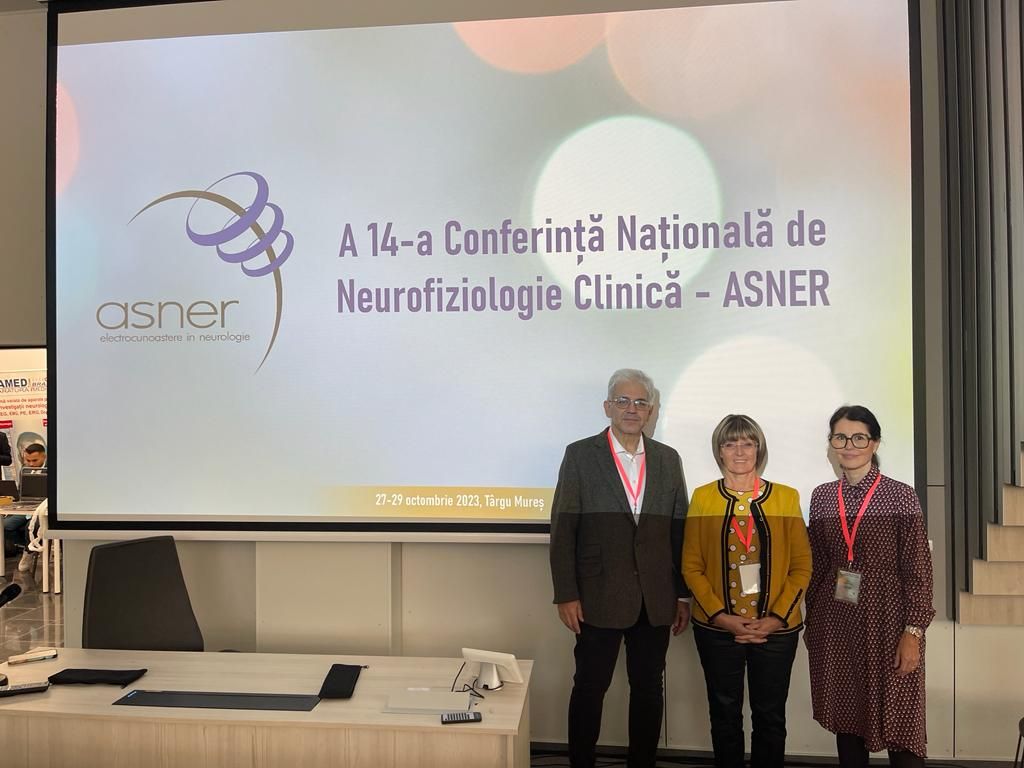
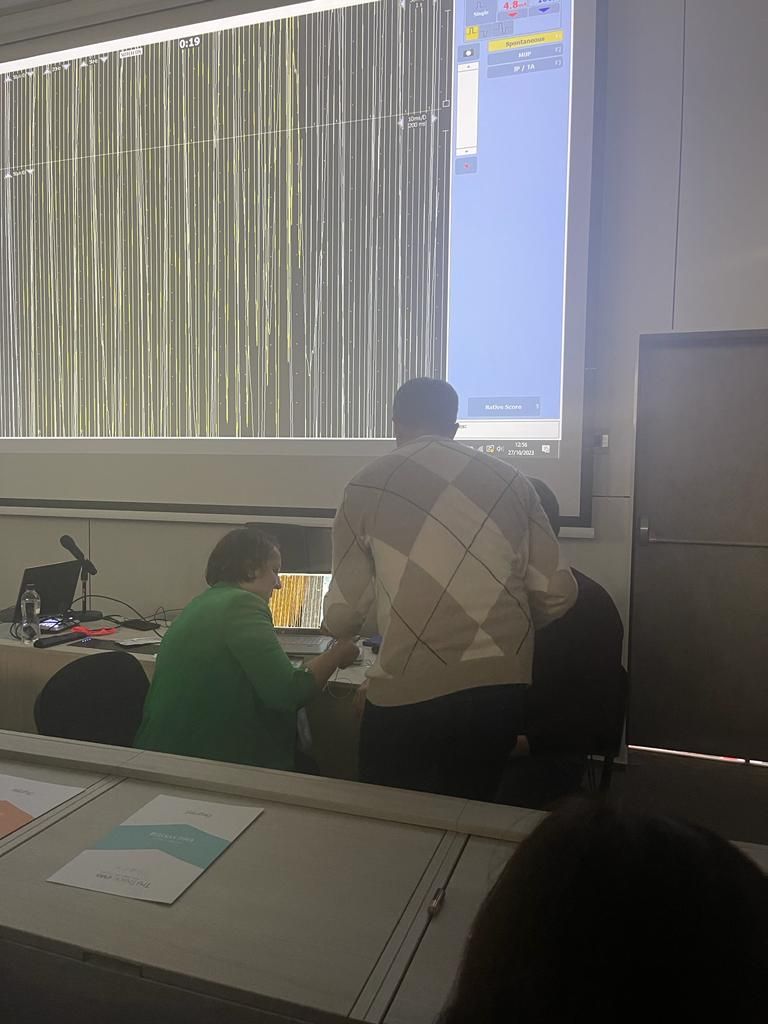
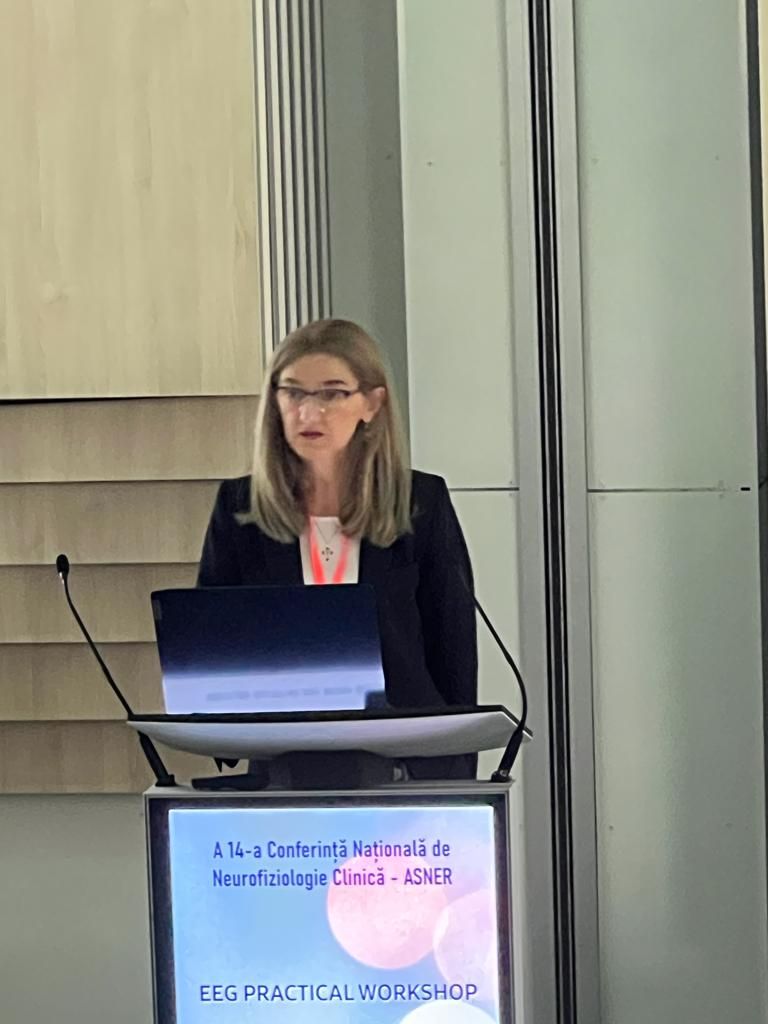
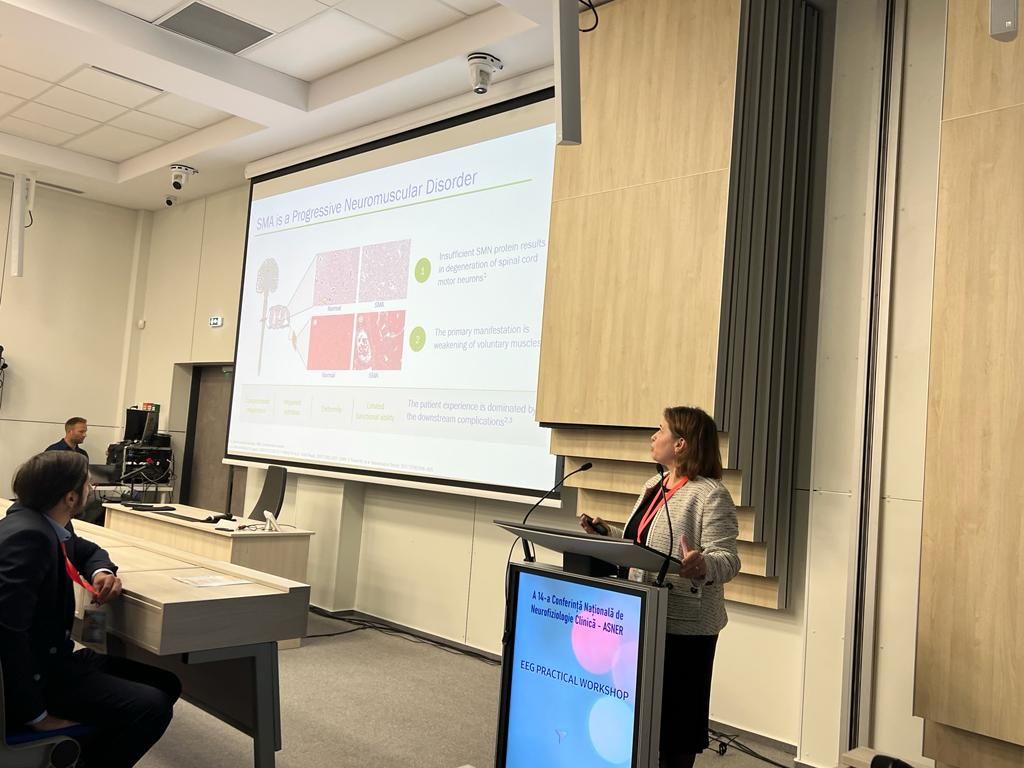
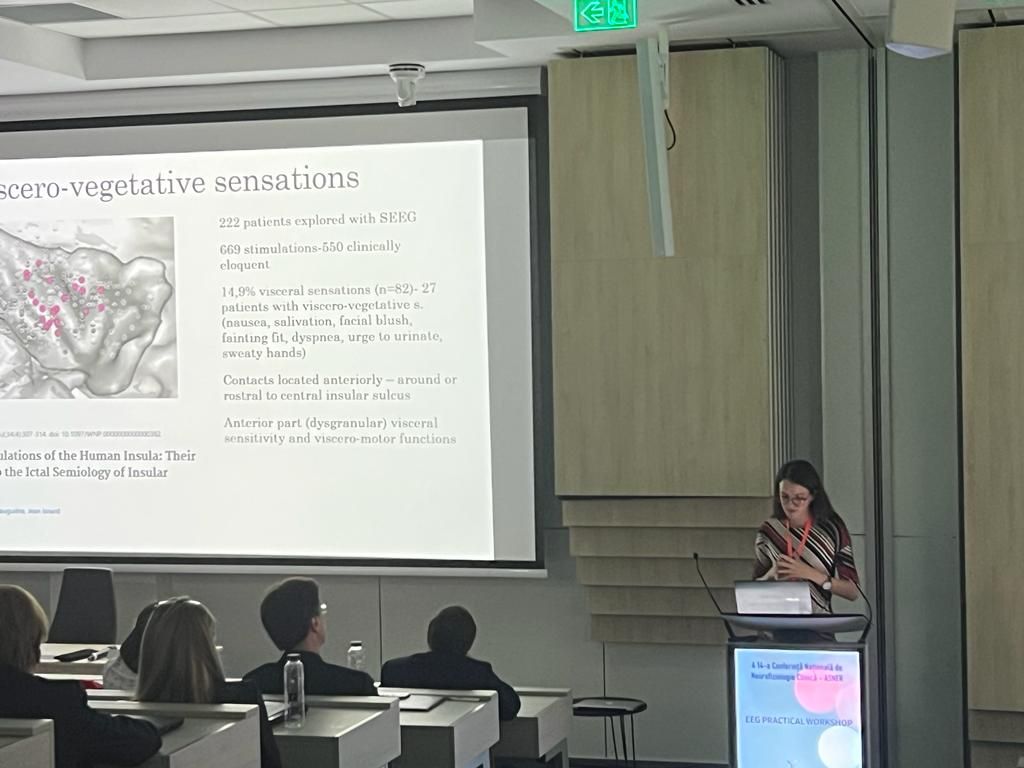
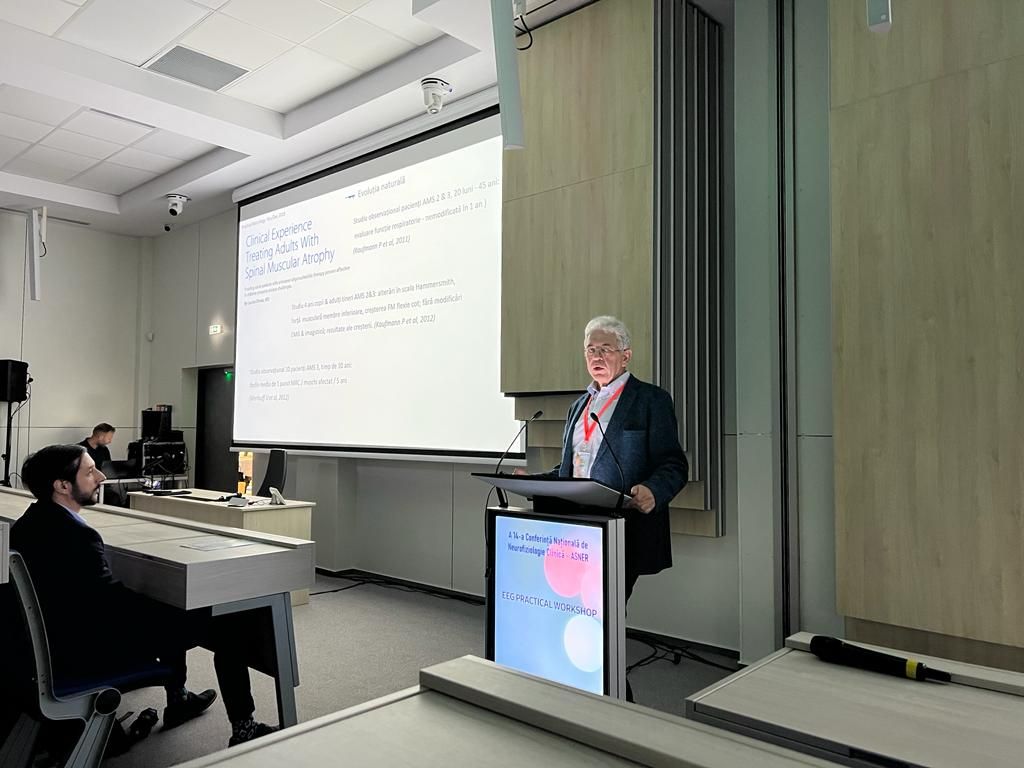
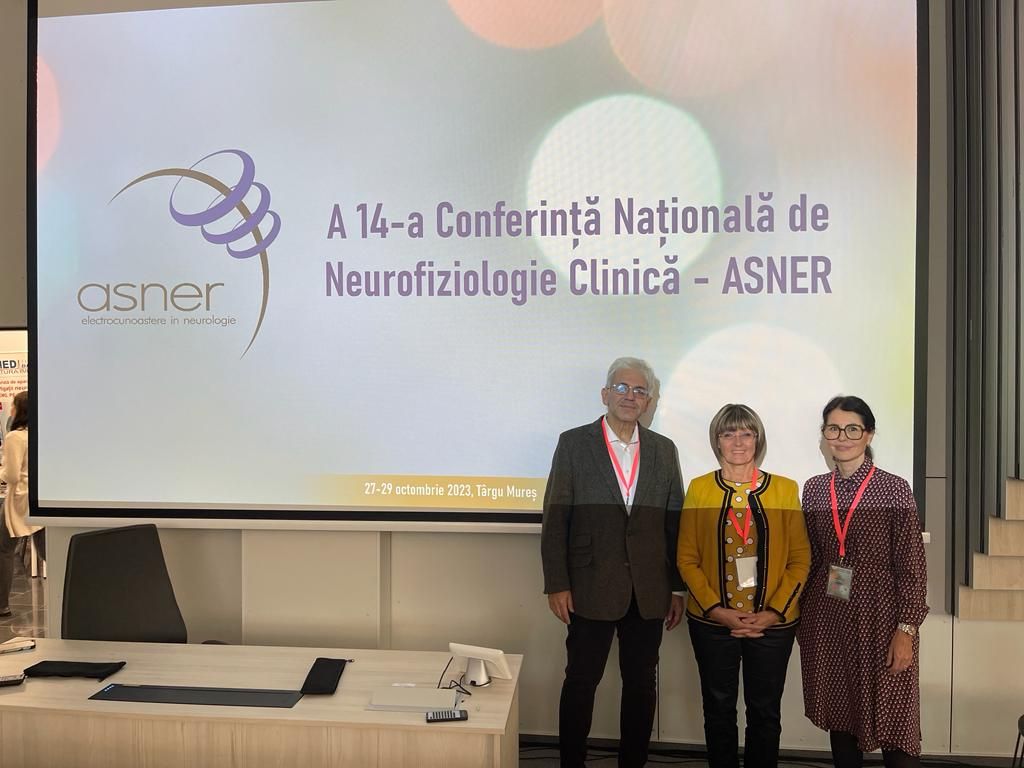
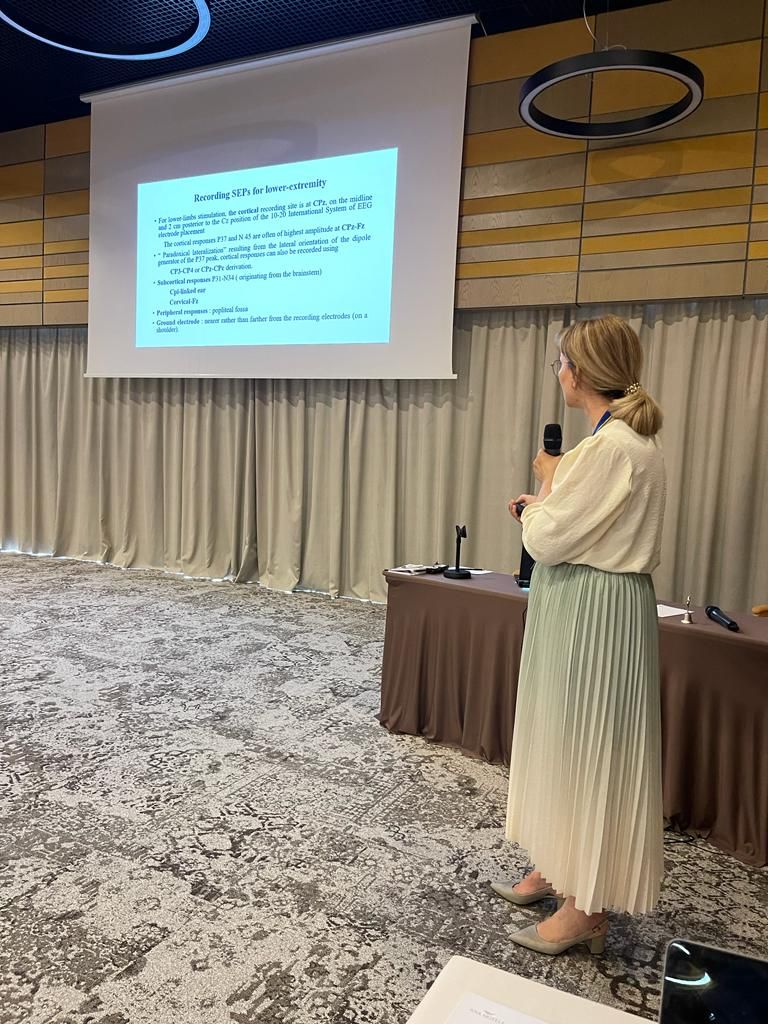
Adina Stoian, Claudia Banescu, Valentin Morosan, Rodica Balasa – Pathogenic variant of the PACS2 gene in an adult patient with infantile epileptic encephalopathy with autosomal dominant transmission – EEG aspects and general considerations.
9.00 – 11.00 EMG and Intraop. monitoring plenary session
Tudor Lupescu – EMG
Dorin Bica – Neurofiziologie intraoperatorie
Zoltan Zsigmund Maior – Monitorizarea intraoperatorie în chirurgia tumorilor cerebrale
Ionela Codiță – Monitorizarea intraoperatorie în chirurgia spinala
11.00-11.30 Coffee break
11.30 – 13.30 EEG plenary session – sesiune în limba engleză
Anita Kamondi – Epilepsy and epileptiform activity in neurodegenerative diseases
Daniel Fabo – Ictal EEG and seizure semiology – electro-clinical correlations in adult patients
Dana Craiu, Carmen Sandu, Cristina Pomeran, Alice Dica, Iuliu Bacos-Cosma, Diana Barca – Electroclinical patterns in pediatric epilepsy syndromes – the context matters
Ioana Mindruta – Simultaneous scalp and intracranial ictal EEG recordings – what do we learn from?
13.30 – 15.30 Lunch
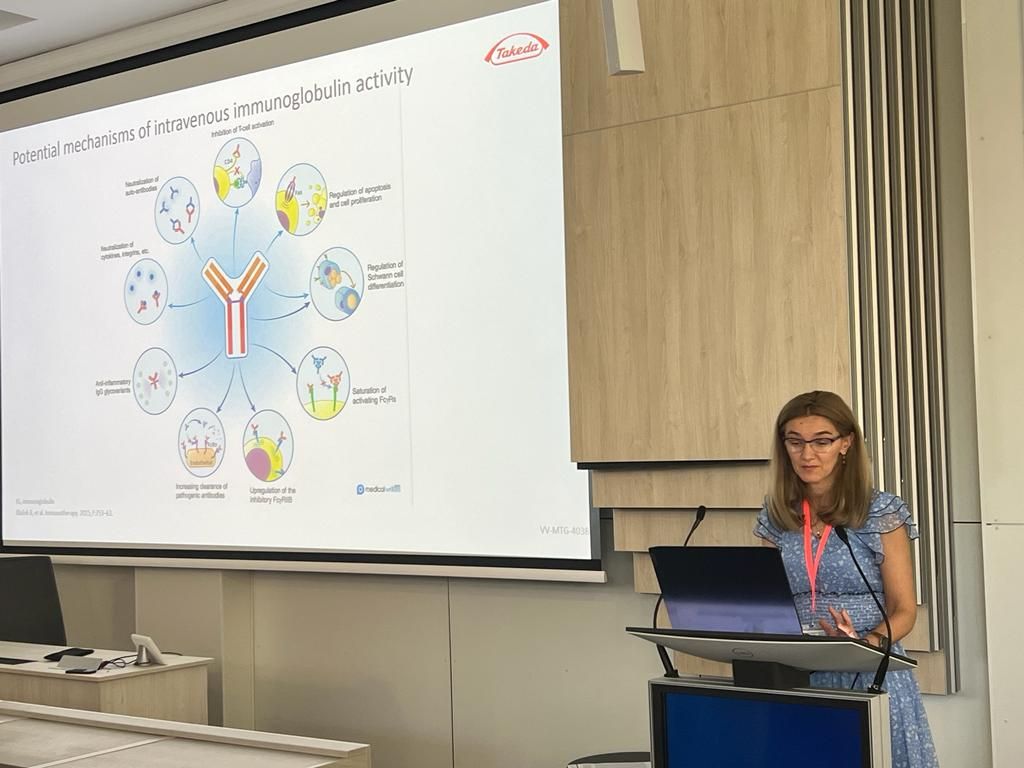
15.30 – 16.00 Use of Immunoglobulins in neurological disorders
16 – 17.30 online presentations in plenary session from Toronto
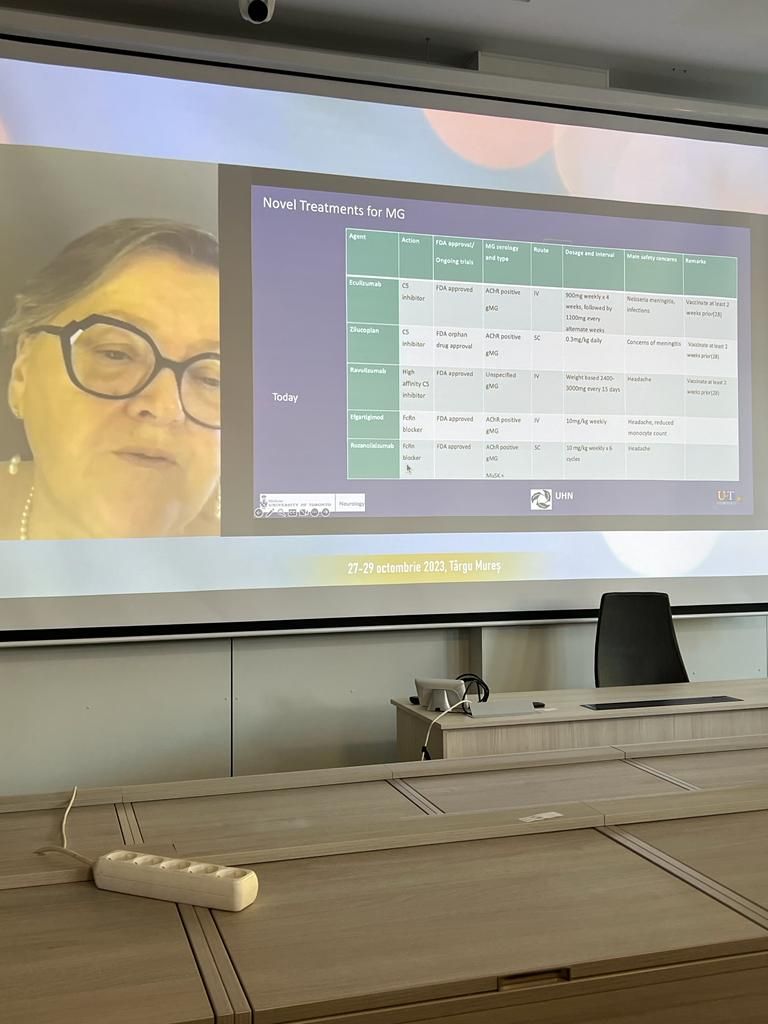
Vera Bril – Electrophysiology of NMJ disorders (Myasthenia Gravis)
Hans Katzberg – Electrophysiology of inflammatory neuropathies
17.30 – 17.45 Coffee Break
17.45 – 18,15 Anca Motataianu – Botulinum toxin in neurological disorders
18.15 – 19.15 Sesiune prezentari EMG
Roxana Toader – Neuronopatiile senzitive – diagnostic si etiologie
Maria Balea – Evaluation of a difficult case
Nicu Draghici – Diagnostic approach to lower limbs neuropathy
29th of October – Sunday
9:00-11:00 Varia in plenary session:
Maria Magdalena Matei, Dan Suiaga, Sorin Tarnoveanu, Oana Tarta Arsene – Neuromonitorizare intraoperatorie – particularitati ale potentialelor evocate motorii (exemplificate cu un caz clinic):
Maria Magdalena Matei, Andrei Daneasa, Sergiu Stoica, Oana Tarta Arsene – Chirurgia epilepsiei, optiune terapeutica pentru epilepsiile cu mutatia NPRL3 la copil?
Laura Craciun – Patternuri ictale in statusul epileptic non convulsivant
Sanda Petrutiu, Valentin Moroșanu -Crizele epileptice acute simptomatice
A. Moțățăianu- Spectrul clinic și electrofiziologic al distrofiilor musculare la adult
A. Moțățăianu- Neuropatii demielinizante autoimune: o provocare diagnostică
Florentina Ghitescu, Clara Resit, Tudor Lupescu Mihai Moldovan – Un caz de hiperexcitabilitate periferică și centrală
A. Stoian, Rodica Balasa – EMG, sometimes a clue for an unexpected disease
Ca în ficare an, ANSER oferă taxe de participare avantajoase pentru membri și rezidenți.
550 RON primar specialist / nemembru ASNER 350 RON primar/specialist membru ASNER 250 RON rezident nemembru ASNER 150 RON rezident membru ASNER
Cotizația anuală:
Pentru informații despre taxa anuală de membru ASNER accesati AICI.
Înregistrare:
Toate locurile disponibile au fost ocupate. Inregistrarea electronica nu mai este posibila.
Secretariatul organizatoric:
Secretariatul care rezolvă toate problemele legate de evidenta plații taxei de participare, locul de desfasurare al evenimentului, cazarea participantilor si alte detalii organizatorice este asigurat de firma LOGOS CONSULT:
A 14-a Școală de Vară ASNER (SDV2023) cu participare internațională va avea loc la HOTEL EUROPA din Eforie Nord, vineri 7 iulie (jumătate de zi) – sambată 8 iulie (zi plină) – duminică 9 iulie (jumătate de zi).
Creditată cu 14 puncte EMC.
Comitet de organizare:
Dr. Tudor Lupescu Dr. Ioana Mindruta Dr. Mihai Moldovan Dr. Ana Cobzaru Dr. Ionela Codita
Programul preliminar:
Vineri, 7 iulie
12.00 – 12.45 Welcome coffee in Lobby sala. Înregistrarea participanților 12.45 – 13.00. Deschiderea oficială a Școlii de Vară
13.00 – 15.00 Sesiune plenară 1
Cristina Motoescu – EEG in sindroamele epileptice la copil Daniela Neagu – Polineuropatia amiloidotica transtiretinica – experienta personala Raluca Teleanu – EEG in primul an de viață. Irina Oane, Camelia Lentoiu, Flavius Bratu, Cristina Ghita, Constantin Pistol, Felicia Mihai, Laurentiu Tofan, Andrei Barborica, Ioana Mindruta – Multiscale EEG and ictal semiology correlates
15.00 – 15.30 Pauza cafea in Lobby sala
15.30 – 17.00 Workshop EEG Basic – discuții de caz pornind de la traseul EEG (case discussions starting from EEG) Studentii vor lucra in grupuri pe cazurile pregătite de care tutori sub îndrumarea acestora (Students are working together on cases prepared by the tutors under supervision) – 5 groupuri
15.30 – 17.00 Workshop EMG Tudor Lupescu – Valoarea electroneuromiografiei in diagnosticul patologiei sistemului nervos periferic Nicolae Grecu – „Raspunsurile tardive – mai mult decat latenta minima a undelor F” Adelina Leonte – Ptoza palpebrala: nerv sau muschi?
17.00 – 17.30 Pauza
17.30 – 19.00 Workshop EEG Basic – cazurile vor fi discutate cu întreaga audienta și concluziile vor fi expuse de către tutori. (Case debriefing with all the EEG audience)
11.30 – 13.00 Sesiune plenara 2 – EEG 11.30 -12.10 Anca Nica – Rennes, France – Semiology of seizures and EEG correlates 12.10 – 12.35 Irina Oane, Ioana Mindruta – Midline and parasagittal EEG epileptiform abnormalities and seizure semiology correlates 12.35 – 13.00 Andrei Daneasa – Temporo-perisylvian EEG epilepileptiform abnormalities and seizure semiology correlates 13.00 – 13.25 Anca Arbune – Role of EEG in the differential diagnosis work-up
11.30 – 13.00 Sesiune EMG Pascal Proot – Electromiografia de fibra unica – principii, indicatii, valoare Pascal Proot – Introducere in miografie
13:00 – 14:30 Masa de pranz in Restaurant Europa
14.30 – 16.00 Workshop EEG 3 – discuții de caz pornind de la traseul EEG (case discussions starting from EEG) Student vor lucra in grupuri pe cazurile pregătite de care tutori sub îndrumarea acestora (Students are working together on cases prepared by the tutors under supervision) – 5 groupuri
16.30 -18.30 Workshop EEG 4 – cazurile vor fi discutate cu întreaga audienta și concluziile vor fi expuse de către tutori. (Case debriefing with all the EEG audience)
Tutori: Anca Nica, Irina Oane, Andrei Daneasa, Anca Arbune, Eugenia Roza, Cristian Teodorescu, Camelia Lentoiu, Cristina Ghiță, Radu Perjoc.
16.30 – 18.30 Workshop EMG Marius Popescu – Ultrasonografie neuromusculară: Avantajele injectarii de toxina botulinica eco-ghidat. Ecografia de nervi periferici.
Duminică, 9 iulie
9.00 – 11.00 Sesiune cazuri Maria Balea – Caz POEMS Nicu Drăghici – Patternul EMG in miozita cu corpi de incluziune Butnariu Ioana – CIDP cu agravare severă la corticoterapie Antonescu Florian – Efectele glucocorticoizilor asupra excitabilității neuronilor periferici
Taxa de participare cuprinde: Accesul în sala de conferintă si ateliere pe durata desfașurării evenimentului, 1 Welcome coffee de deschidere (vineri 7 iulie), 3 Pauze de cafea (2 pauze sâmbătă 8 iulie si 1 pauza duminica in 9 iulie), 1 Cina (vineri 7 iulie) si 1 Pranz (sâmbătă 8 iulie).
Ca în ficare an, ANSER oferă taxe de participare avantajoase pentru membri și rezidenți.
600 RON primar/specialist membru ASNER
850 RON primar specialist / nemembru ASNER
300 RON rezident membru ASNER
400 RON rezident nemembru ASNER
Pentru informații despre taxa anuală de membru ASNER accesati AICI.
Opțiune cazare la HOTEL EUROPA:
Pentru participanții care optează să stea la HOTEL EUROPA, ASNER a negociat prețuri preferențiale valabile pentru rezervare 2 nopți (7/8 si 8/9 iulie 2023):
Camera single – 680 RON/ noapte x 2 nopti
Camera dublă – 795 RON / noapte x 2 nopti
Formularul de înregistrare:
Toate locurile au fost ocupate. Înregistrarea online nu mai este posibilă. Pentru informații suplimentare contactați secretariatul. Vă mulțumim pentru interes!
Informatii referitor la Plata taxei de participare și a cazării (doar dupa efectuarea inregistrarii online). Datele pentru plata taxei de participare si a cazarii le veti primi pe email, dupa efectuarea inregistrarii.
ATENTIE: Unele mesaje pot fi catalogate drept spam. In caz ca nu primiti email de confirmare in INBOX intr-o ora de la inregistrare, verificati si SPAM/JUNK mail. Daca nu gasiti mesajul, contactati secretariatul.
Secretariatul Organizatoric al SDV 2023:
Rezolvă toate problemele legate de evidenta plații taxei de participare, locul de desfasurare al evenimentului, cazarea participantilor si alte detalii organizatorice. Este asigurat de: